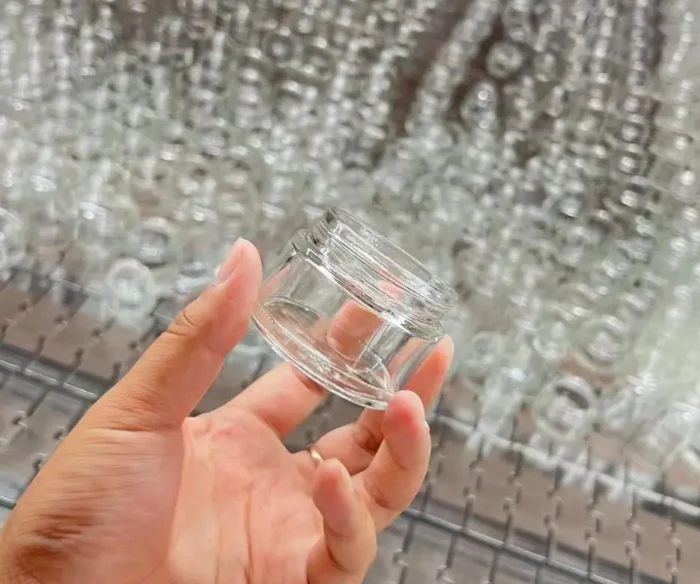
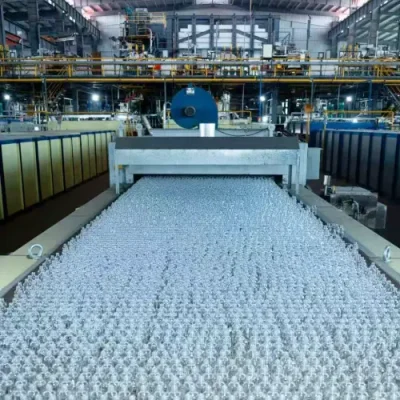
Given the continuous increase in cannabis use worldwide, especially in Europe and the Americas, cannabis storage has become an unavoidable issue in the market. Before choosing a cannabis container, understanding the active ingredients of cannabis and the principles of proper storage can help you make a better decision when selecting good weed containers. As a member of Easyjar, an industry-leading cannabis storage container research company, I will provide this weed container guide to explain cannabis storage and help you better understand the key knowledge needed for choosing suitable cannabis containers.
Why Does Weed Need to Be Stored
Cannabis needs to be stored mainly for the following reasons:
Maintaining Quality and Potency
The main active ingredients in cannabis (such as tetrahydrocannabinol THC, cannabidiol CBD, etc.) are sensitive to light, heat, air, and humidity. Improper storage can cause these ingredients to degrade, reduce the potency of cannabis, and affect its medicinal or recreational use effects. For example, when exposed to light or high temperatures, THC may be converted into cannabinol (CBN), weakening psychoactivity. Therefore, cannabis containers are usually used to reduce the impact of external environmental factors on the ingredients, especially for medical cannabis, which requires a more stable and sealed med container weed.
Preventing Deterioration and Contamination
Cannabis is an organic substance and is easily contaminated by microorganisms such as mold and bacteria, especially in humid environments. Improper storage may also attract pests, causing cannabis to deteriorate, become moldy, or produce odors, affecting safety and usability. In practical applications, well-sealed weed containers can help stabilize internal humidity and air contact, thereby reducing the risk of deterioration and contamination.
Extending the Use Cycle
For cannabis growers or brand sellers, reasonable storage can extend the shelf life of cannabis, keep it usable for a longer period of time, and reduce losses during cannabis storage. Some dedicated stash containers for weed usually have moisture-proof, light-blocking, and sealing designs, helping provide more stable long-term preservation.
Safety and Compliance Requirements
In legal regions, cannabis is a controlled substance and needs to be stored according to regulatory requirements to ensure safe storage and prevent unauthorized access or misuse, especially keeping it away from children and unrelated personnel. Therefore, the cannabis jars produced by Easyjars are all equipped with child-resistant caps. This type of jar must be pressed down hard and then rotated before the lid can be opened.
In summary, storing cannabis is intended to maintain its quality over the long term, ensure safe use, and meet legal and commercial needs.
What Are the Choices for Weed container
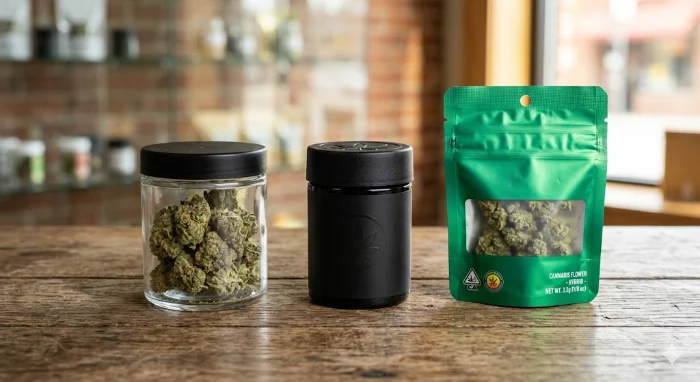
After understanding the storage principles of cannabis containers, we know that in the legal storage and processing of cannabis, containers made of different materials will directly affect its aroma, active ingredients, and overall stability. Common types can be divided into three categories: glass jars, plastic jars, and plastic bag packaging, each suitable for different storage purposes.
1. Glass Containers (Recommended for Long-Term Storage)
Glass jars are the most stable and also the most commonly used storage solution, suitable for the long-term preservation of flower/leaves and cannabis extracts, with capacities ranging from 3ml to 500ml. Most capacities below 10ml are used to store concentrated extracted cannabis oils, while the others are used to store cannabis flower. Cannabis glass jars are suitable for medium- and long-term storage, handling, and wholesale sales, and are the preferred solution for quality protection.
Advantages:
- Strong sealing performance; when paired with a silicone sealing ring (such as Easyjar’s glass weed smell proof container), it can effectively isolate air and moisture
- Inert material; it does not react chemically with the contents, helping maintain the stability of aroma and active ingredients over the long term
- When paired with dark or colored glass (such as commonly used colored Mason jars and dark sealed glass bottles), it can reduce the impact of ultraviolet rays and maintain the active ingredients of cannabis
Limitations:
- It is relatively heavy, which will increase the overall weight burden during bulk storage or transportation, thereby raising logistics and handling costs.
- Transportation protection requirements are high. Due to its fragile characteristics, transportation and warehousing need to rely on shockproof packaging such as foam and wooden boxes for protection; otherwise, breakage is likely during collision or vibration.
2. Plastic Bottles/Jars (Suitable for Short-Term or Circulation Use)
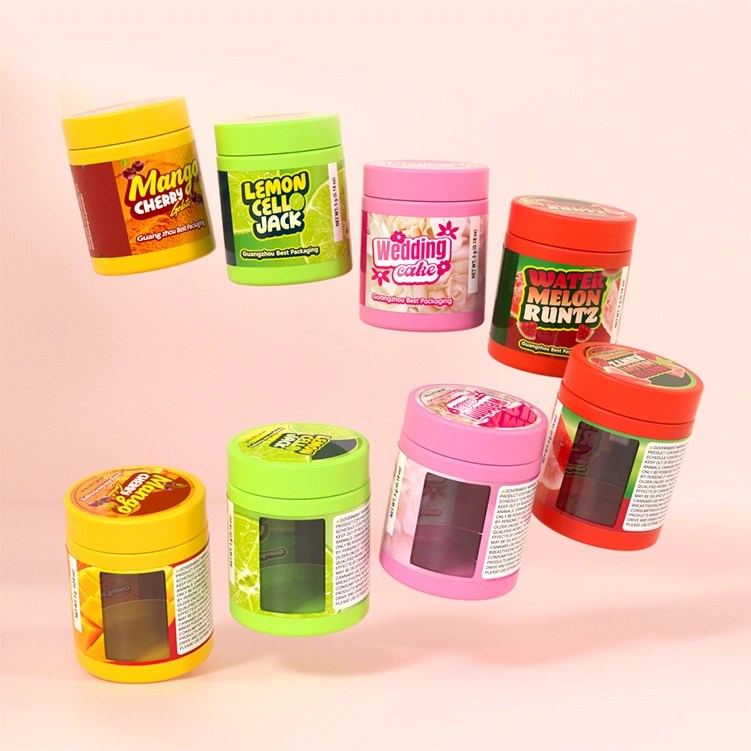
Plastic containers are inexpensive, lightweight, and have a certain level of sealing, making them suitable for short-term carrying, quick access, or transportation of flower/leaves. Capacities range from 10ml to 500ml, but 30ml or slender plastic tubes are suitable for storing 1-5 pre-rolls, and other plastic jars can also be used for food packaging with cannabis ingredients added. They are ideal containers for daily travel and store sales.
Advantages:
- Not easy to break and lightweight. Convenient for transportation and daily carrying.
- Low cost; for example, our easyjars one-piece molded PP weed pop top containers are inexpensive tubes, and they have a child-resistant design with an integrated connected cap that opens by pressing down on the bottle opening. They can hold up to five pre-rolls.
Limitations:
- Relatively weak protection of cannabis quality. The gas and moisture barrier properties of plastic containers are usually not as good as those of glass, making them unsuitable for high-demand and long-term storage.
- Insufficient high-end appearance; the overall texture and premium capability of plastic packaging are relatively weak. Our customers generally design special adhesive labels to add to the tubes/plastic jars to improve their packaging texture and brand influence.
3. Bag Containers (Suitable for Primary Processing and Short-Term Storage)
Bagged cannabis containers usually include sealed plastic bags or aluminum foil composite bags, and are widely used in the initial stage of industrial cannabis. They are suitable for collection in the early harvest stage, short-term storage, or subdividing before transportation, but are not suitable as final long-term storage solutions.
Advantages:
- Lowest cost, convenient to use
- Small space occupation, suitable for large-volume preliminary collection
- Some composite material bags have certain light-shielding and barrier capabilities
Limitations:
- Overall sealing performance is lower than that of rigid containers, let alone compared with special rigid containers such as no smell weed container.
- Insufficient physical protection. Cannabis can easily be crushed or broken during transportation or storage. Stability in long-distance transportation is relatively poor.
- Non-child-safe packaging. Most basic ziplock bags do not meet statutory child-safety standards and can be easily opened by children.
How to Prevent Odor Diffusion During Weed Storage
1. Use Sealed Containers
It is recommended to choose glass jars, plastic containers, or dedicated sealed bags, and ensure that the sealing structure is complete (such as silicone gaskets), in order to effectively prevent cannabis odor from leaking and greatly reduce air exchange. During long-term use, the aging condition of sealing rings should be checked regularly to avoid continuous odor diffusion caused by air leakage.
2. Control the Storage Environment
Maintain the temperature at 15-21°C, avoid high temperatures accelerating terpene volatilization or low temperatures causing condensation; control humidity at 50%-65% to prevent excessively dry or excessively wet conditions from causing odor changes; at the same time, use anti-UV containers to avoid ingredient degradation and odor generation caused by light exposure.
3. Controlled Atmosphere or Vacuum Storage Technology
Through vacuum sealing (such as an odor proof weed container with a vacuum design) or adjustment of gas composition (reducing oxygen and increasing the proportion of nitrogen or carbon dioxide), oxidation reactions and microbial activity are inhibited, reducing odor generation from the source. This technology is usually used in high-end or long-term storage scenarios and can significantly extend the cannabis storage cycle.
4. Reduce Opening Frequency
Minimize the number of times the container is opened, and seal it immediately after use, in order to reduce the opportunities for odor to diffuse outward. It is recommended to package according to single-use quantities to reduce volatilization of active ingredients caused by repeatedly opening cannabis bottles and jars.
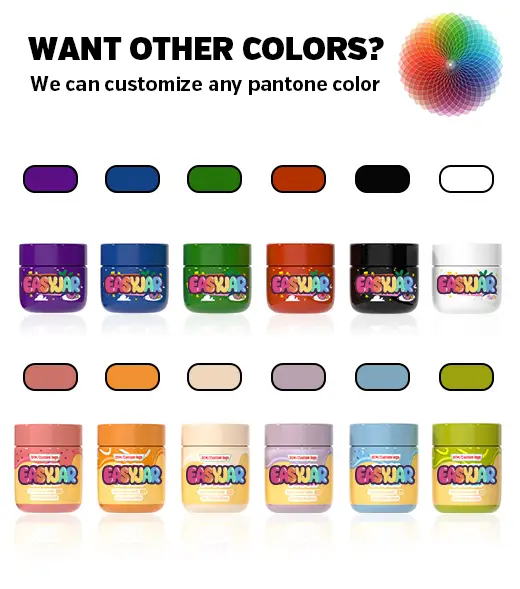
Application Industries of Cannabis Containers
1. Commercial Brand Building
From the perspective of commercial brand building, when selecting cannabis containers, brand positioning, compliance and safety, consumer experience, and sustainable development should all be taken into account. Container design should conform to the brand tone and strengthen brand recognition through color, material, and Logo display. Packaging should have child-resistant, tamper-evident, and anti-counterfeiting functions, and clearly mark storage information to meet regulatory requirements.
At the same time, ease of use and preservation performance should be emphasized, and appropriate materials should be selected according to budget and usage needs, such as cannabis glass jars and cannabis plastic jars. Using reusable or recyclable materials helps shape a brand’s environmentally friendly image. In addition, packaging cost and scaled production needs must be balanced to ensure compatibility with automated equipment. High-quality containers not only protect products, but also convey brand value and enhance consumer trust and loyalty.
2. Pharmaceutical Research Industry
In the pharmaceutical research industry, medical weed containers are mainly used to store cannabis flower, cannabis extracts (cannabis oil, wax), pure cannabinoids (such as THC, CBD), and other cannabis preparations for pharmacological research and drug development. Cannabis containers need to have features such as high sealing, corrosion resistance, safety, and no contamination, and support information traceability such as batch numbers and COA. Commonly used containers include medical-grade amber glass bottles, PTFE-lined bottles, and medical plastic or aluminum sealed tubes.
Summary of weed container guide :
The above introduces the key precautions for cannabis storage, the advantages and disadvantages of containers made of different materials, and selection suggestions for different application scenarios.
If you would like to learn more about cannabis storage and packaging knowledge, you are welcome to consult Easyjars. As a professional cannabis storage jar manufacturing factory, we have rich customization experience and can provide customization services for various shapes, capacities, and Logos. From product design and mold development to production testing, we can quickly solve various technical problems, especially having accumulated rich experience in bottle-mouth structure, lid sealing performance, and thread matching tests.
If you are building your own cannabis brand, Easyjars is willing to provide you with professional and efficient one-stop packaging solutions.