Regarding the common question of “how to roll a cone,” we can start from the basic structure of a hand-rolled cigarette (joint), which mainly contains 4 parts: herbs (ground cannabis/tobacco), rolling paper, filter tip (optional), and the rolling action. Below is a detailed explanation following the sequence from “materials to final form.”
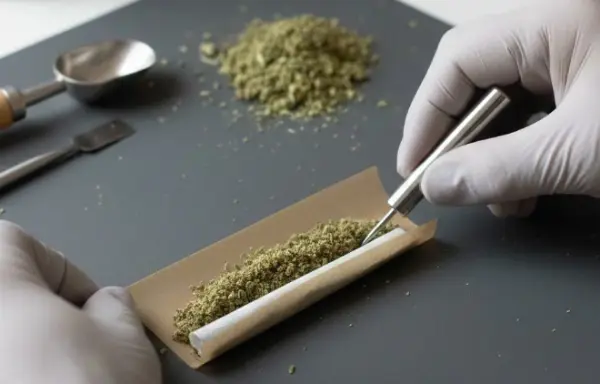
I. Structural Composition of a Hand-Rolled Cigarette
A standard hand-rolled cigarette is usually arranged from the lighting end to the inhalation end as follows:
- The front burning area containing cannabis (or tobacco)
- Transitional compression area
- Filter tip area (if used)
- Rolling paper wrapping layer
Viewed from the cross-section, it is roughly:
- Center: cannabis/tobacco filling
- Outer layer: rolling paper
- Tail end: smoking filter tip
Since cannabis is filled manually, the density of the internal filling is usually not completely uniform. Experienced rollers generally use the following rolling strategy:
- Slightly loose near the lighting end
- Evenly distributed in the middle section
- Slightly tighter near the filter tip end
This makes the cigarette easier to burn steadily and less likely to lose filling material.
II. Material Breakdown
1. Cannabis / Tobacco Filling
Common conditions:
- Fine strands (easy to roll)
- Thick strands (slower burning)
- Moist material (harder to ignite)
- Dry material (burns faster)
Ideal condition of cannabis flower:
- Slight elasticity when pinched by hand
- No clumping
- Not damp
- Cannabis leaves with trichomes may also be selected as supplementary filler material
Distribution principles:
- Long strands in the middle
- Short broken pieces filling the edges
- Avoid creating “voids”
Otherwise, it may lead to uneven burning, inconsistent burn rates, and abnormal draw resistance for cannabis (or tobacco) smokers.
2. Rolling Paper
Types of rolling paper include:
- Standard thin paper
- Ultra-thin paper
- Slow-burning paper
Structure:
- One side contains a glue strip
- The glue strip is used for the final seal
Placement direction of the paper:
- Glue strip facing upward
- Glue strip positioned on the outer side
- Used for sealing after the rolling process is completed
3. Filter Tip (Optional)
The filter tip is usually placed:
- At the very end of the rolling paper
- Near the holding position of the cigarette
Functions:
- Maintains structural shape
- Prevents filling material from entering the mouth
- Increases draw stability
Common diameters:
- 6 mm
- 7 mm
- Slim type

III. Details of Cannabis Flower Distribution
This is the most important factor determining the quality of the final form.
Correct Distribution Shape
Ideal filler arrangement:
Lighting End → Middle Section → Filter Tip End
Loose → Even → Slightly Tight
Why the Lighting End Should Be Slightly Looser
If the lighting end is packed too tightly, the cannabis plant fibers cannot fully contact air, making it difficult to ignite and easier to extinguish.
If the middle section is uneven, areas with inconsistent filling are prone to uneven side burning.
If the tail end is too loose, the filler material can easily fall out.
IV. Breakdown of how to roll a cone
Step 1: Lay Out the Paper
Support the rolling paper with your fingers and hold it using two fingers. Keep the glue strip facing upward and the concave side facing yourself, forming a shallow groove.
Step 2: Insert the Filter Tip (Optional)
The cannabis filter tip is usually placed on the right side (common for right-handed users). Left-handed users may reverse the orientation. The filter tip should align evenly with the edge of the rolling paper.
Step 3: Spread the Filling Material
Spread the filler evenly along the length of the rolling paper.
Note:
- Slightly more material in the middle
- Slightly less material at both ends
- Compress the herb slightly near the inhalation end close to the filter tip
Step 4: Pre-Shaping (Most Critical Step)
Use both thumbs and index fingers to gently rub back and forth while rolling. This shapes the filler into a cylinder and removes empty gaps. This stage determines the final roundness and structural consistency.
Step 5: Inner Rolling
Action sequence:
- Tuck the front edge of the paper underneath the filler
- Roll upward while maintaining even tension
Core principle:
- Do not apply sudden force
- Keep tension consistently even throughout the rolling process
Step 6: Sealing
Moisten the glue strip and continue rolling to seal the paper. Wait a few seconds for it to set firmly.
V. Ideal Condition After Formation
A good hand-rolled cigarette usually has:
- Uniform and straight appearance
- No obvious hard lumps
- No cracking at either end
- Slight elasticity when gently pinched
After lighting:
- The burn line remains even
- It does not extinguish frequently
- The smoke draw resistance is moderate during inhalation
VI. “Density Gradient” in Professional Cigarettes
Industrial cigarettes are also not completely uniform internally.
Usually, they feature:
- Lower density at the front end
- Standard density in the middle section
- Slightly higher density at the rear end
This is because the front end must ignite easily, while the rear end must provide stable draw resistance. Mimicking this structure when hand-rolling creates an experience closer to factory-manufactured cigarettes.
VII. Development of Rolling Skill and Sensory Judgment
Experienced rollers usually evaluate their cigarettes using three types of sensations:
1. Pinch Feel
It should feel like lightly squeezing a sponge:
- Not too hard
- Not collapsed
2. Rolling Feel
While rolling:
- No grainy sensation
- No internal breaks or layering gaps
3. Draw Resistance
Ideal condition:
- Slight resistance
- But effortless to inhale
Important Health Notice
Long-term and excessive cannabis (or tobacco) consumption increases multiple health risks, including cardiovascular disease, lung disease, and cancer. If your interest in hand-rolling is based on craftsmanship or curiosity about structure, it is recommended to avoid frequent consumption.

How to Store Hand-Rolled Cannabis Cigarettes
If you cannot finish smoking your rolled cigarette and there is leftover material, remember not to disassemble it or casually throw it into a drawer. Doing so may create safety hazards, especially if infants or children come into contact with it, which could cause serious harm.
We recommend using professional child-resistant glass or plastic pre-roll tubes for storage, which provide the following advantages:
| Advantage | Description |
|---|---|
| 1. Child-resistant protection | Prevents children from opening and accessing the contents casually. |
| 2. Moisture and air isolation | Reduces mold growth and prevents the evaporation of terpenes, active compounds, and strong odors, allowing for longer storage periods. |
| 3. Easy portability | Compact pre-roll tubes can easily fit into pockets or backpacks without occupying much space. |
| 4. Brand promotion | Cannabis cultivation and sales companies can customize logos/label printed on the surface of the tube to enhance corporate branding. |
If you would like to learn more about cannabis cigarette information, storage recommendations, or customized pre-roll tubes designed specifically for your company, you may contact the customer service staff at Easyjars.