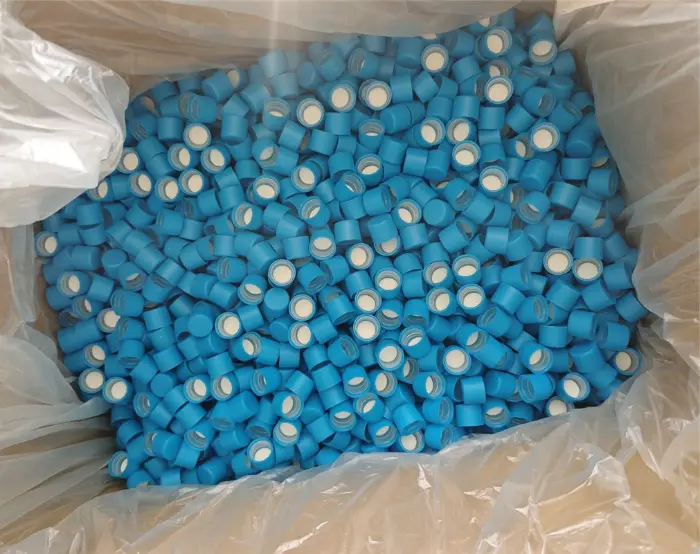
Choosing the right pre-roll tube supplier is not simply about buying packaging components. In real mass production, your tube supplier directly affects filling efficiency, shipping damage rate, product complaints, regulatory labeling stability, and long-term brand consistency.
Many brands only realize this after scaling up: samples look fine, but once volume increases, problems start to appear — cracked tubes, inconsistent caps, unstable sealing, scratched surfaces, or size variations that jam filling lines.
In most cases, these problems are not caused by the material itself, but by weak manufacturing systems, poor engineering control, and unstable quality management at the manufacturer level.
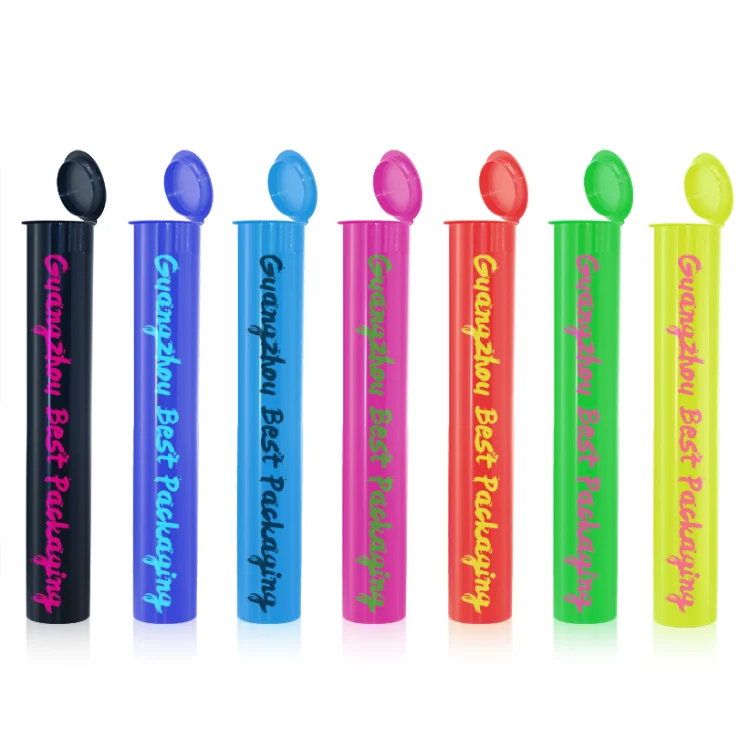
What Does a Real Pre-Roll Tube Supplier Actually Do?
A professional pre-roll tube supplier is not just an injection molding factory or a glass forming supplier. In a mature supply chain, the manufacturer must control the entire packaging system, including:
- Tube body and cap production
- Material formulation and batch consistency
- Mold design and dimensional tolerance management
- Sealing structure and cap-fit system
- Assembly compatibility with filling processes
- Quality inspection, traceability, and lot control
- Stable mass production and delivery scheduling
From an engineering perspective, a pre-roll tube is a functional industrial component, not a decorative container. A real manufacturer is responsible for how it performs in logistics, retail, and real consumer use, not just how it looks in samples.
Why Material Choice Alone Is Never Enough
Most buyers start by asking: “Should I use PP, PET, or glass?”
But experienced manufacturers know:
The material only defines the potential. The factory system defines the result.
The same PP, PET, or glass can perform very differently depending on:
- Wall thickness design:
Wall thickness is not just about strength — it directly affects impact resistance, material shrinkage behavior, and production stability. Poor thickness design often leads to weak stress points, higher cracking risk, and unnecessary material cost at the same time. - Stress distribution:
If stress is not evenly distributed in the structure (especially around threads, snap-fit areas, or sharp corners), the tube may survive factory inspection but crack later during transportation or stacking due to residual internal stress. - Cooling and forming process:
Improper cooling speed or uneven cooling will create internal stress and deformation, which is one of the main reasons for delayed cracking, warpage, and dimensional instability in plastic tubes. - Tooling precision:
Mold accuracy directly determines dimensional consistency, cap fit quality, and sealing performance. Poor tooling precision often causes batch-to-batch variation, unstable assembly feel, and unpredictable leakage or loosening problems. - Quality inspection standards:
Without clear and consistent inspection criteria for dimensions, appearance, fit, and function, defects will pass through into the market and only be discovered after large quantities are already shipped, which is the most expensive stage to fix problems.
That’s why evaluating the manufacturer’s engineering and production system is far more important than only choosing a material name.
PP Pre-Roll Tubes: The Industrial Workhorse
PP (Polypropylene) is the most widely used material in pre-roll tube manufacturing, especially in projects that require high volume, stable supply, and predictable cost control.
From a manufacturing perspective, PP is not just “cheap plastic” — it is a very forgiving industrial material with a wide processing window, which makes it easier to keep quality stable across long production cycles and multiple batches.
Why Manufacturers Rely on PP
- Excellent impact resistance and fatigue resistance
PP can absorb shock and deformation without cracking, making it highly suitable for long-distance transportation, multi-layer stacking, and repeated handling in distribution channels. This directly reduces hidden costs caused by shipping damage. - Low density, reducing logistics and shipping cost
PP tubes are lighter than PET and much lighter than glass, which creates real cost savings when volumes scale to hundreds of thousands or millions of units. - Very stable injection molding window
PP has a wide and forgiving processing range, making it easier to control cycle time, dimensional stability, and scrap rate in long-term production. - High output efficiency and low scrap rate
Compared with PET or more complex material systems, PP is less sensitive to small process fluctuations, allowing factories to maintain stable productivity and delivery schedules. - Mature global resin supply chain
PP is one of the most widely available plastics in the world, which means less risk of material shortages, fewer price shocks, and better long-term supply security.
Where PP Performs Best
- High-volume retail distribution
PP’s toughness provides a high safety margin against cracking during shipping and warehousing. - Projects with long transportation routes
The combination of light weight and impact resistance makes PP ideal for cross-country or international logistics. - Brands that prioritize stability and cost control
For mature SKUs with predictable demand, PP offers the best balance of unit cost, quality stability, and supply reliability. - Automated or semi-automated filling lines
PP’s dimensional tolerance and toughness make it more tolerant of mechanical insertion and capping processes.
What a Good Manufacturer Must Control
- Wall thickness uniformity to avoid weak points and stress concentration
- Internal stress management to prevent delayed cracking after shipping or storage
- Shrinkage consistency to keep cap fit stable across batches
- Thread or snap-fit precision to avoid loose or overly tight caps
In real mass production, most “mysterious cracking” problems are caused by process stress and structural design, not by the PP material itself.
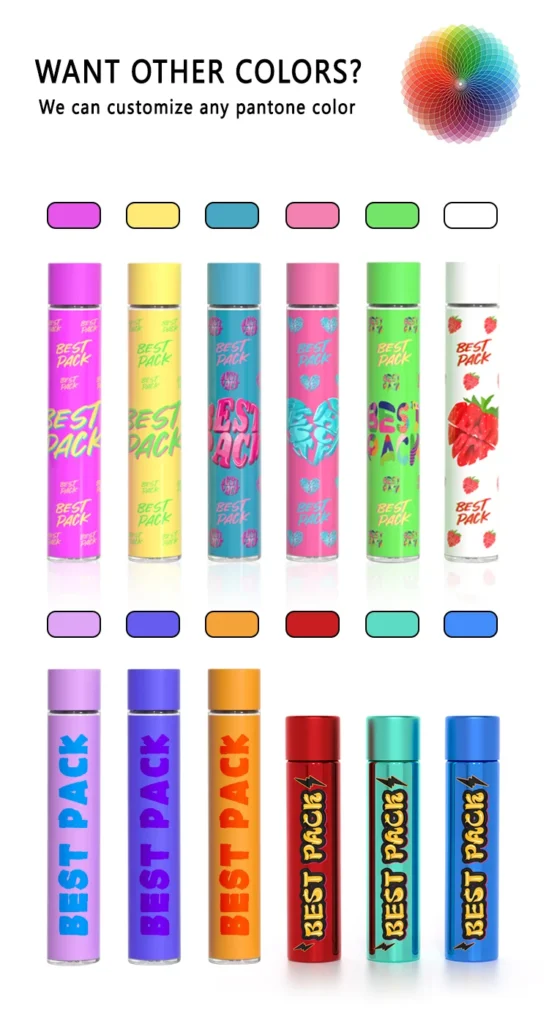
PET Pre-Roll Tubes: The Display-Oriented Solution
PET (Polyethylene Terephthalate) is mainly chosen when visual presentation and shelf impact are important parts of the product strategy.
Compared with PP, PET offers much better transparency and surface gloss, but it also requires stronger process discipline and handling control.
Why Brands Choose PET
- High transparency and gloss
Allows consumers to clearly see the product inside, increasing trust and reducing purchase hesitation. - Better shelf display and product visibility
In competitive retail environments, visibility often directly affects conversion rate. - Higher perceived packaging value
Even with small cost differences, PET often supports higher retail positioning. - Better rigidity and shape retention
PET keeps a straighter, crisper appearance, especially for longer tubes.
Where PET Makes Sense
- Brand-focused retail shelves where visual differentiation matters
- Mid-to-high-end product lines that need stronger first impression
- Projects where shelf appearance affects sales performance
- Products where customers want to “see before buying”
What Manufacturers Must Handle Carefully
- Surface scratch control, including packing and handling method
- Clarity consistency between batches, to avoid uneven shelf appearance
- Brittle-fracture risk under impact, requiring better transport protection
- Static and dust attraction, requiring cleaner packing environment
PET looks better than PP, but it is less forgiving and requires better manufacturing discipline.
Glass Pre-Roll Tubes: The Premium Packaging Path
Glass is mainly used for high-end, gift, or limited-edition packaging, where packaging itself is part of the product value.
From a material perspective, glass is nearly perfect. From a logistics perspective, it introduces a completely different cost and risk structure.
Why Manufacturers Still Use Glass
- Best barrier performance (no gas, moisture, or odor permeability)
- Absolute chemical stability (no migration or interaction risk)
- Strong premium and luxury perception
- High-end visual and tactile experience
Where Glass Is a Rational Choice
- High-value single pre-roll products
- Gift boxes and collector editions
- Brand lines that rely on visual and tactile impact
- High-margin, lower-volume products
The Real Engineering Challenge
- Wall thickness distribution control
- Impact resistance and drop testing
- Cap matching and sealing structure precision
- Protective packaging and transport system design
In real projects, glass is not expensive to manufacture — it is expensive to protect and ship.
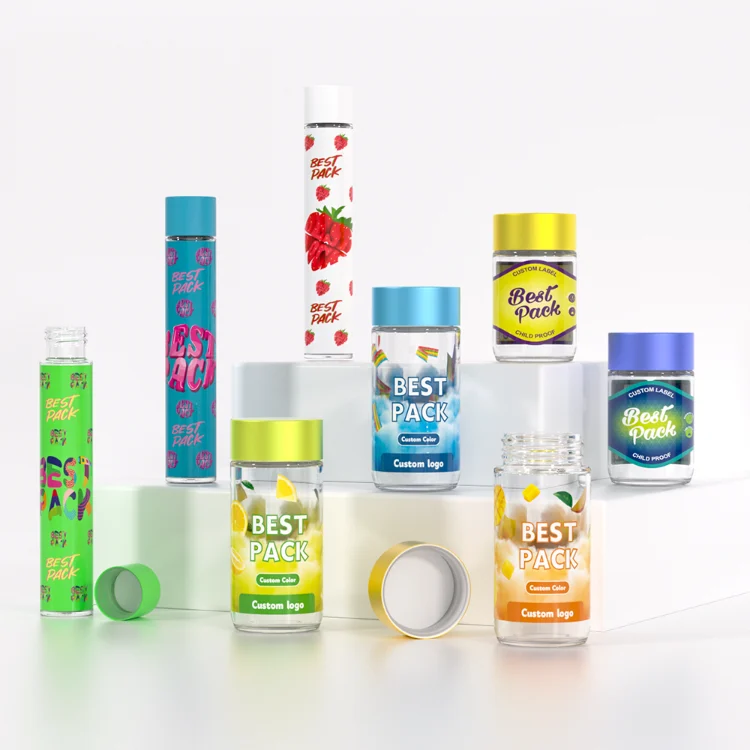
Engineering Capability: The True Divider Between Manufacturers
A real pre-roll tube supplier should:
- Review your filling method and recommend tolerances
- Optimize wall thickness for strength and cost
- Adjust cap structure to balance sealing and usability
- Predict logistics risks and propose structural solutions
If a supplier can only follow drawings but cannot analyze and improve designs, they are not a true manufacturing partner.
Tooling, Process Control, and Quality System
Stable mass production depends on:
- Mold precision and maintenance system
- Process window control
- Multi-cavity balance control
- Incoming, in-process, and final inspection
- Batch traceability and consistency management
Without these systems, problems usually appear after 2–3 production batches, when switching suppliers becomes expensive and risky.
The Real Cost: Why Unit Price Is Misleading
Real cost is:
Unit price + breakage + rework + complaints + delays + re-labeling + lost shelf time
A good pre-roll tube manufacturer helps you:
- Reduce shipping damage:
By optimizing wall thickness, material selection, and structural reinforcement points, a professional manufacturer can significantly lower breakage rates during stacking, long-distance transport, and warehouse handling. - Improve filling efficiency:
Stable dimensions, consistent cap fit, and well-controlled insertion force make tubes easier to handle in manual or automated filling lines, reducing jams, rework, and line stoppages. - Avoid repeated size or structure changes:
Proper engineering validation at the beginning of the project prevents costly mid-project redesigns caused by hidden fit, sealing, or logistics problems that only appear after scale-up. - Maintain stable shelf appearance:
Good process control and material consistency ensure that color, transparency, surface finish, and overall look remain consistent from batch to batch, protecting brand image across different production lots.
In long-term projects, a slightly higher unit price often means a much lower total cost of ownership (TCO).
PP vs PET vs Glass: Practical Selection Logic
| Material | Best For | Main Strength | Main Risk |
|---|---|---|---|
| PP | Mass market | Tough, stable, low cost | Less premium look |
| PET | Display products | Clear, glossy, rigid | Scratch & brittle |
| Glass | Premium lines | Best barrier & feel | Breakage & logistics cost |
Final Conclusion
A real pre-roll tube supplier is not just a packaging supplier, but a manufacturing system partner who understands your production process, anticipates your logistics risks, and aligns with your market positioning. More importantly, they deliver packaging solutions that work reliably in real mass production and real distribution environments—not just samples that look good in the lab.